
The Texas High School Basketball Hall of Fame Class of 2027 contains enough victories and championships to fill a record book. Its more important value, however, is what those achievements reveal about how basketball excellence has developed across different regions, eras and types of Texas programs.
The class features coaches Danny Wrenn, Matt Garrett, Stan Bonewitz and Leland Hand alongside former players Clay Click, C.J. Miles, Amber Tarr Delach and Jamie Smith. The eight inductees are scheduled to be honored in San Antonio in May 2027 during the annual Texas Association of Basketball Coaches Clinic.
Collectively, they represent Panhandle girls basketball, East Texas championships, San Antonio innovation, small-town dynasties, record-setting scorers and players whose careers extended far beyond high school.
Danny Wrenn Built A Plainview Standard
Danny Wrenn’s 774 career victories immediately explain why he belongs in the Hall of Fame, but the stronger story is the standard Plainview maintained under him.
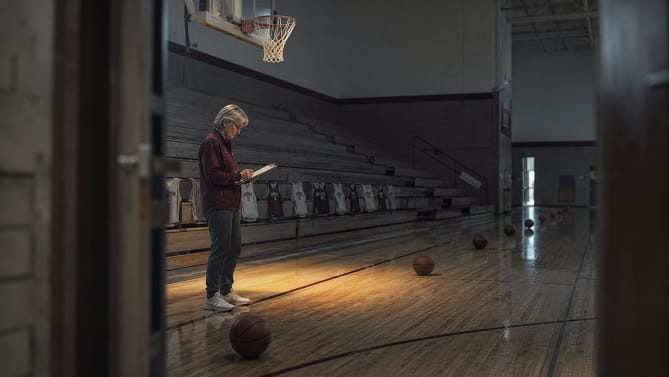
Wrenn took over the Lady Bulldogs in 1989 after serving as an assistant to Hall of Fame coach Kathy Harston. Plainview eventually reached 10 regional tournaments and five state tournaments under Wrenn, winning three consecutive state championships from 2001 through 2003. The school later named the court at The Doghouse in his honor in 2022. Wrenn died in 2023.
Three consecutive championships demonstrate something different from one exceptional season. They require player development to continue as graduating classes change, while expectations remain high enough for younger players to understand what championship preparation looks like.
That sustained culture makes Wrenn’s legacy more valuable than the 774-win figure by itself.
Matt Garrett Shows Why Winning In Different Places Matters
Matt Garrett compiled a 707–270 record during a 35-year coaching career, including 30 seasons as a head coach. His teams made 24 playoff appearances, won 17 district championships and reached 13 regional tournaments.
More revealing is where those accomplishments happened.
Garrett coached at Nazareth, Happy, Mason, Victoria, Bowie, Hardin-Jefferson, Christoval and Chapel Hill. He won four state championships, including three consecutive titles with Nazareth from 2001 through 2003 and another championship with a Chapel Hill team that finished 37–0.
That geographic range matters for Texas basketball. Success at multiple schools requires adapting to different enrollment sizes, available personnel and community expectations.
Garrett’s résumé therefore reflects program construction as much as total victories.
Stan Bonewitz Changed How A San Antonio Team Could Play
Stan Bonewitz’s East Central teams became memorable not simply because they won, but because they challenged the style of basketball common in their era.
Bonewitz finished his 36-year head-coaching career with a 708–432 record. His defining team was the 1994–95 East Central group, which went 35–0 and defeated Dallas Carter 108–86 for the Class 5A state championship. The Hornets averaged a state-record 108.8 points per game while playing relentless full-court defense and pushing the ball aggressively in transition.
His son, Stan Bonewitz Jr., was the point guard driving that championship offense and was himself previously inducted into the Texas High School Basketball Hall of Fame.
That connection makes the elder Bonewitz’s recognition especially fitting. His legacy is partly about winning, but also about creating a basketball identity strong enough to influence players and coaches beyond his own career.
Leland Hand’s Troup Teams Represent Small-School Continuity
Leland Hand provides another version of championship building.
His Troup teams won back-to-back Class 2A state championships in 1991 and 1992. The UIL archives show Troup defeating Krum 60–40 for the 1991 title before returning one year later and beating Amarillo Highland Park 69–49.
Repeating at the state level is particularly revealing in smaller classifications, where roster depth can change quickly between graduating classes.
Hand’s place in the class helps keep the Hall of Fame from becoming a simple list of coaches from Texas’ largest programs. The state’s basketball history was built just as meaningfully in communities such as Troup.
The Four Players Represent Very Different Texas Basketball Paths
The player half of the class broadens the story further.
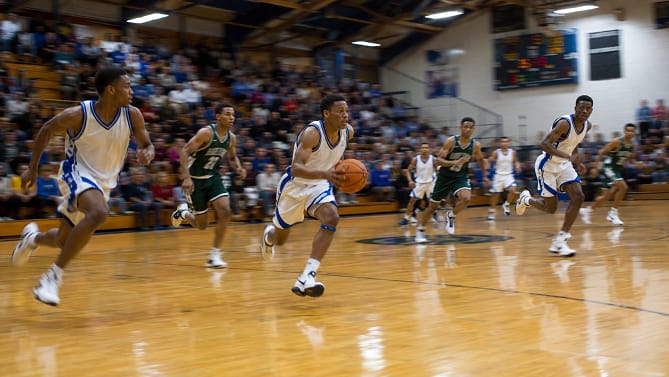
Amber Tarr Delach helped Ozona win Class 2A state championships in 1995 and 1996. She became a four-time All-State selection, earned Miss Texas Basketball honors in 1998 and was later selected to the UIL All-Century third team. Her career continued at Texas Tech.
Clay Click became one of San Antonio’s most productive high school scorers at Alamo Heights before playing at Texas State. C.J. Miles emerged from Dallas Skyline and went directly into a professional career that ultimately covered 16 NBA seasons. Jamie Smith became a standout at Austin McCallum, where her senior season included nearly 30 points per game and district player-of-the-year recognition.
Those careers did not follow one template. That is precisely what makes the class useful for understanding Texas basketball history.
A Hall Of Fame Should Preserve More Than Numbers
Career victories remain important because sustained winning is difficult. Championships matter because they mark the highest competitive achievement available to Texas high school programs.
But numbers alone cannot explain why particular coaches and players remain significant decades later.
The 2027 class captures systems that survived roster turnover, innovative styles that changed how teams played, small communities that reached statewide prominence and athletes who carried Texas basketball into college and professional competition.
For today’s coaches and young players, those are the more useful lessons.
A Hall of Fame works best when it preserves not only who won, but how basketball developed around those people. The 2027 Texas High School Basketball Hall of Fame class does exactly that.