
Elite girls’ basketball showcases are increasingly competing for more than strong rosters. The best events now need recognizable locations, compelling matchups, fan access and an atmosphere that makes players feel they have reached something bigger than another weekend tournament.
The 2026 Mamba Invitational delivered that combination on August 8–9 at L.A. LIVE in downtown Los Angeles. Hundreds of fans attended the free outdoor event near Crypto.com Arena as elite high school boys and girls competed on a Mamba-inspired court surrounded by basketball history, artwork and product culture.
For the girls’ side, the result was especially significant. Team Relentless defeated Team Resilience in a tight championship game after Jordyn Palmer scored late to help secure the title. Palmer earned MVP honors, while Sydney Savoury provided backcourt production for the champions and GG Banks and Caroline Bradley helped make Team Resilience a difficult opponent.
The broader story is what the setting says about where elite girls’ basketball events are heading.
The Location Made The Tournament Feel Bigger
The Mamba Invitational did not take place on an isolated convention-center court.
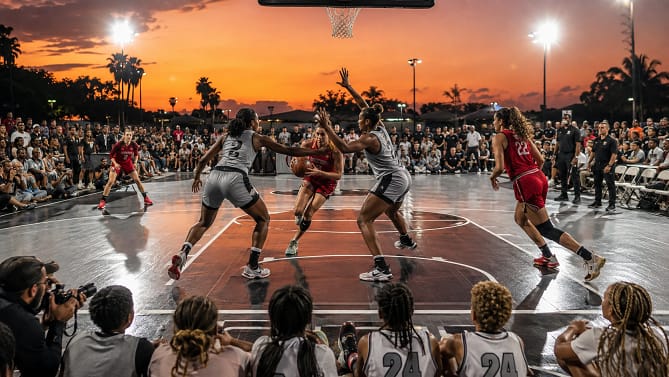
It was staged at L.A. LIVE, directly beside one of American basketball’s most recognizable arenas and within the city most closely connected to Kobe Bryant’s NBA career. That location gave the event an identity before the first game started.
According to coverage from Swish Appeal, the tournament combined high-level basketball with murals, merchandise and a “Sole Obsession” installation created by Troy Murray displaying outsoles from Bryant’s signature footwear history.
That matters because young athletes increasingly experience showcases as complete events rather than simply schedules of games.
Families travel. Players create memories around the destination. Fans who are not connected to a particular team can still attend. The surrounding basketball culture gives the competition a reason to matter beyond recruiting exposure.
Jordyn Palmer Gave The Girls’ Tournament Competitive Credibility
Palmer was not simply a recognizable prospect placed into a showcase lineup.
She entered Los Angeles after an outstanding international summer.
At the 2026 FIBA U18 Women’s AmeriCup in Irapuato, Mexico, Palmer averaged 18.8 points and 7.4 rebounds while helping the United States win the championship. She recorded 24 points, 13 rebounds and five steals in the 90–72 victory over Canada in the final and was named tournament MVP.
That background raised the competitive credibility of the Mamba Invitational. Palmer then delivered in another high-pressure situation, scoring late in the championship game for Team Relentless.
Her presence also illustrates how the elite girls’ basketball calendar now overlaps across multiple systems.
Players can move from USA Basketball into shoe-circuit competition, invitational events and emerging national platforms without a long offseason separating them.
Palmer is also returning as a captain for the Cold Hearts in Overtime Select after averaging 11.5 points and 6.5 rebounds during her previous OT Select season. The Cold Hearts roster shows how athletes appearing in events such as the Mamba Invitational are already building national basketball profiles through several competitive environments.
Sydney Savoury Shows How Deep The Talent Pool Has Become
Savoury reinforces the same point.
The Belleville High School guard was part of the 2026 USA Women’s U18 National Team alongside Palmer. That means Team Relentless’s championship backcourt and frontcourt included athletes already tested against international competition.
The USA Basketball U18 roster also included other leading young players from across the country, showing how closely connected national-team basketball has become with the broader elite high school ecosystem.
For event organizers, that depth is important.
A destination showcase cannot depend entirely on one famous prospect. Fans need multiple players worth watching, and athletes need opponents strong enough to make the competition meaningful.
The Mamba Invitational succeeded because its girls’ championship remained competitive rather than becoming an exhibition built around celebrity names.
The Free-Event Model Can Expand Girls’ Basketball Audiences
The decision to make the event free also deserves attention.
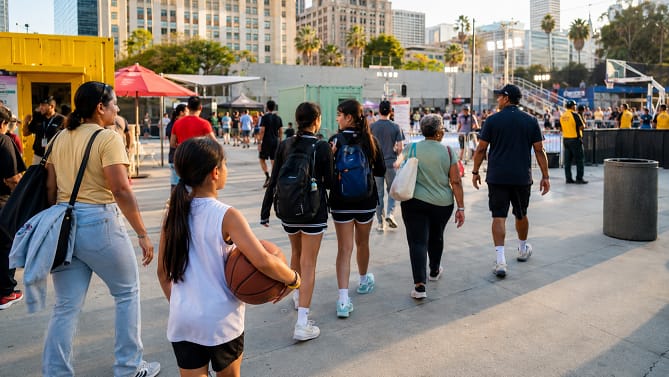
Elite youth basketball often happens behind entry fees, tournament passes and travel barriers. Staging high-level games in a public-facing entertainment district gave casual basketball fans another way to encounter top girls’ prospects.
Nike’s broader Mamba League program emphasizes participation, coaching and basketball development for boys and girls around Greater Los Angeles. The Invitational effectively places elite competition at the visible end of that basketball ecosystem.
That connection can matter for younger players.
A child participating in a community league can see athletes only a few years older competing in a major public event. The development pathway becomes easier to visualize.
For Texas coaches and tournament organizers, that may be the most transferable lesson.
A successful showcase does not have to copy Los Angeles or Bryant-themed branding. It can combine strong competition with a location, atmosphere and community connection that makes families want to attend even when their own team is not playing.
The 2026 Mamba Invitational showed that elite girls’ basketball can occupy that kind of space. The games remained the center of the event, but the destination made those games feel more significant.