
Elite LTX’s fourth-grade boys team did more than return to Laredo with a trophy from Las Vegas. Its 63–3 season offered evidence that South Texas youth basketball programs are becoming capable of building teams that can develop together locally and still compete successfully when they leave their normal regional circuit.
Elite LTX completed its season by going 4–0 at the 2026 Grand Finale in Las Vegas from July 24–26. The Laredo-based team defeated IE Elite of Fontana, California, 40–38 in the championship game, closing a season in which it lost only three times across 66 games.
Head coach CJ Martinez led the group with assistant coaches Mat Duron, Andy Pompa and JJ Gomez. The roster included Marcelo Valdez, Eugenio Galindo, Rogelio Villarreal, Fay Gutierrez, Alfredo Camero, Rudy Noyola and Manning Deveze.
The record attracts attention. The more important story is how the team accumulated it.
A 63-3 Record Reflects Repetition, Not One Tournament
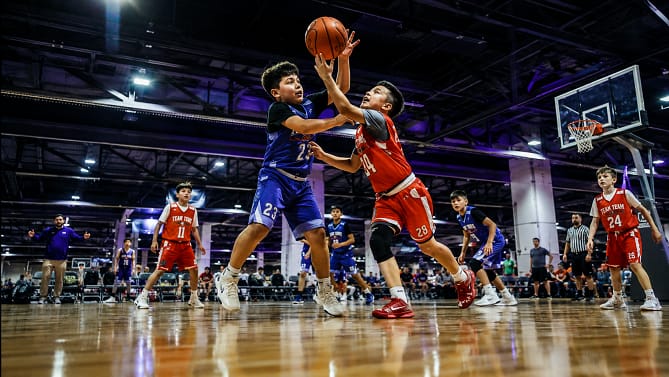
Youth basketball results can be difficult to compare across regions because competition levels, tournament formats and age divisions vary. A 63–3 record still represents an unusual amount of sustained success.
Elite LTX did not build that number through one strong weekend. According to the Laredo Morning Times report on the championship, the group remained unbeaten against opponents from Laredo, San Antonio and the Rio Grande Valley before closing its season against competition from outside Texas.
That progression matters.
Local games allow coaches to install habits. Regional events expose players to different styles. An out-of-state tournament provides another test because opponents arrive without the same familiarity with personnel and tendencies.
For fourth-grade players, the primary goal should remain development rather than accumulating rankings. Yet repeated competitive games can help young athletes learn spacing, defensive communication and how to respond when a possession does not go as planned.
Elite LTX’s season suggests its players received plenty of those repetitions.
The Las Vegas Championship Tested The Program Outside Texas
The Grand Finale gave Elite LTX a useful benchmark.
The official 2026 Grand Finale tournament listing featured teams across numerous boys’ and girls’ divisions from second grade through varsity levels. Playing in Las Vegas meant Elite LTX faced an environment considerably removed from a normal South Texas weekend.
The final offered the clearest test.
IE Elite came from Fontana, California, giving the Laredo team an opponent from a different regional basketball environment. Elite LTX won 40–38, a margin small enough that late possessions, defensive execution and decision-making mattered.
That type of game can be more useful for development than a comfortable victory.
Young teams eventually need situations where one turnover, defensive rotation or rebound changes the outcome. Coaches can simulate those moments in practice, but tournament pressure makes the lesson more immediate.
Winning four games in Las Vegas confirmed that Elite LTX’s success was not limited to familiar opponents.
Continuity May Be The Program’s Biggest Advantage
Several Elite LTX players have competed together for years, an important detail behind the 63–3 record.

At younger ages, continuity can accelerate team development because players begin learning each other’s tendencies before physical development dramatically changes their roles.
A guard knows where a teammate prefers to receive the ball. Defenders understand who will rotate behind them. Players recognize when a teammate is likely to cut or attack.
Those details matter even in elementary-school basketball.
Continuity also allows coaches to move beyond basic organization. When players already understand expectations, practices can devote more time to decision-making, individual technique and situational basketball.
Martinez and his staff appear to have built that kind of foundation.
The challenge is preserving development as winning becomes more common. Young players should continue experimenting with skills rather than becoming locked permanently into the role that produces the easiest tournament victories.
A successful youth pipeline produces better basketball players, not simply dominant fourth-grade teams.
Laredo Is Showing More Evidence Of Basketball Depth
Elite LTX is not an isolated recent result.
Other Laredo programs also traveled to the 2026 Grand Finale. Level Up Basketball’s fifth-grade girls team went 4–0 and won its division, while its fourth-grade boys finished runner-up despite competing with only five players.
That additional success strengthens the argument that Laredo’s youth basketball base is expanding.
Local infrastructure matters as well. Laredo hosts organized elementary and middle-school tournaments, while training programs and facilities have continued attracting camps and basketball events.
The city recently hosted San Antonio Spurs forward Keldon Johnson for his third consecutive Laredo youth camp, providing another connection between local players and higher levels of the game.
These pieces do not automatically create future college athletes. They create opportunities: more practices, more competitive teams, more coaching and more reasons for families to remain engaged.
For Texas basketball families, Laredo is increasingly worth watching as a development market rather than simply a distant tournament participant.
Travel Still Shapes The South Texas Development Model
Elite LTX’s championship also reveals a structural challenge.
To test itself against broader competition, the team traveled from Laredo to Las Vegas. That requires transportation, lodging, entry fees, meals and substantial family time.
Competitive youth basketball increasingly depends on travel, but the financial burden can determine which athletes receive those opportunities.
A stronger South Texas pipeline therefore needs both approaches: teams capable of traveling to major events and better tournaments coming closer to Laredo.
More strong local and regional competition would allow families to reduce travel without reducing meaningful games.
Elite LTX’s 63–3 season shows what can happen when coaching continuity and tournament opportunities come together. Its next significance may depend on whether programs across Laredo can create the same environment for more players.
The Las Vegas trophy belongs to one team. The larger development story belongs to a city showing that its youth basketball programs can compete beyond South Texas