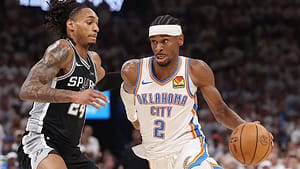
The San Antonio Spurs used the 2026 NBA Draft to strengthen qualities that should remain valuable around Victor Wembanyama regardless of how the rest of the roster changes. Size, defensive range, rebounding, disruptive hands and patience defined a four-player class featuring Jayden Quaintance, Tarris Reed Jr., Ja’Kobi Gillespie and Maliq Brown.
San Antonio selected Quaintance with the 20th pick on June 23, acquired Reed’s draft rights from the Denver Nuggets at No. 26 and returned on June 24 to take Gillespie at No. 42 and Brown at No. 44. The Spurs did not build the group around immediate scoring needs or one narrow positional vacancy. They added several defensive profiles that can develop at different speeds.
Quaintance is the long-term investment. Reed brings greater physical maturity and college experience. Gillespie offers point-of-attack pressure and guard playmaking. Brown supplies defensive awareness across multiple frontcourt assignments.
The class reflects where the Spurs are in their team-building cycle. San Antonio already has Wembanyama, De’Aaron Fox, Stephon Castle, Dylan Harper and Devin Vassell handling the largest offensive responsibilities. Its 2026 rookies do not need to become high-usage scorers. They need to develop skills that can hold up around established creators and inside playoff lineups.
San Antonio Drafted Traits That Can Survive Role Changes
NBA prospects often enter the league with roles that change several times before they establish themselves. A college center may become a switching forward. A high-scoring guard may need to play without the ball. A defensive specialist may remain outside the rotation until his shooting becomes dependable.
The Spurs selected players whose strongest attributes can remain useful through those changes.
Quaintance and Reed give San Antonio two large frontcourt prospects with shot-blocking and rebounding backgrounds. Brown has already demonstrated that he can affect games without controlling the offense. Gillespie produced as a scorer at Tennessee, yet his pressure defense and passing give him paths to contribute when his shot volume declines.
That approach fits a roster constructed around Wembanyama. San Antonio does not need to identify another player who duplicates its franchise center. It needs teammates who can defend beside him, protect the structure when he rests and turn his offensive gravity into efficient possessions.
The Spurs’ official 2026 draft profile described Quaintance as a prospect who could enter the organization’s development program without pressure to provide immediate help. That freedom matters. San Antonio can judge its rookies by whether they acquire sustainable NBA skills rather than whether they produce early counting statistics.
For a team coming off a 62–20 season and an NBA Finals appearance, that is a different draft challenge from selecting near the top of a rebuild. The Spurs could prioritize developmental value because their central rotation was already established.
Jayden Quaintance Represents The Longest Investment
Quaintance is the clearest example of San Antonio drafting for a future version of the roster rather than an opening-night need.
The Spurs selected the 6-foot-10, 255-pound forward-center at No. 20 after a college career split between Arizona State and Kentucky. He averaged 8.8 points, 7.5 rebounds and 2.4 blocks across 28 games while shooting 53 percent from the field.
His freshman season at Arizona State supplied the strongest evidence of his defensive ceiling. Quaintance averaged 9.4 points, 7.9 rebounds and 2.6 blocks in 24 starts, earned Big 12 All-Freshman and All-Defensive honors and set a Sun Devils freshman record with 63 blocked shots.
His Kentucky season provided much less information. Quaintance appeared in only four games after returning from a right knee injury, then missed the remainder of the season with a lingering issue.
That medical and developmental context makes patience central to his evaluation. The Spurs should not measure his first year by minutes played or points scored. His priorities will include rebuilding game conditioning, learning NBA defensive spacing, improving screening angles and becoming a reliable decision-maker with limited offensive touches.
The Spurs’ first-round announcement showed why they were willing to accept that timetable. Quaintance entered the league with an uncommon combination of youth, strength, mobility and proven shot-blocking production.
His theoretical fit with Wembanyama is attractive. A healthy Quaintance could defend physical frontcourt players, switch onto smaller opponents and allow Wembanyama to operate as a roaming back-line defender. He could give San Antonio another vertical target and offensive rebounder without demanding designed post possessions.
That version will require time. His selection suggests the Spurs believe they have enough roster stability to provide it.
Tarris Reed Jr. Offers A More Immediate Physical Profile
San Antonio treated Reed differently from a typical late first-round option. The Spurs sent the 35th pick and two future second-round selections to Denver to acquire his rights at No. 26.
That price indicated a clear organizational preference.
Reed entered the draft after starting all 33 of his games for Connecticut during the 2025–26 season. The 6-foot-11, 265-pound center averaged 14.8 points, 9.1 rebounds, 2.4 assists and 2.0 blocks while shooting 60.6 percent from the field. He earned First Team All-Big East honors and helped UConn reach the NCAA championship game.
His tournament production raised his profile further. Reed averaged 19.5 points and 13.2 rebounds during the NCAA Tournament, earned East Regional Most Outstanding Player recognition and made the NCAA All-Tournament Team.
Those numbers do not guarantee immediate NBA success, but they show a player accustomed to physical assignments, structured half-court basketball and games carrying postseason consequences.
Reed gives San Antonio a different timetable from Quaintance. At 22 years old with four college seasons behind him, he should be more prepared to absorb contact, understand defensive rotations and execute a narrow professional role. His initial responsibilities may center on rebounding, screening, interior defense and finishing around the rim.
He still faces a major adjustment. NBA centers must defend more space, recognize actions earlier and make rapid passing decisions after receiving the ball near the paint. Reed’s ability to survive outside traditional drop coverage may determine whether he becomes a situational backup or a more flexible rotation piece.
The Spurs do not need to force that answer immediately. Luke Kornet provides an established option behind Wembanyama, giving Reed a chance to develop without being treated as the only solution to San Antonio’s backup-center minutes.
Maliq Brown May Be The Class’s Purest Defensive Connector
Brown’s selection at No. 44 fit the theme of San Antonio’s draft as closely as any pick.
The Duke forward was named the 2025–26 ACC Defensive Player of the Year and ACC Sixth Man of the Year. He made the ACC All-Defensive Team twice during a college career that included two seasons at Syracuse and two at Duke.
Brown led the ACC with 2.2 steals per game during the 2023–24 season at Syracuse and averaged 1.8 steals as a Duke senior. Those numbers reflect more than quick hands. His value comes from anticipation, positioning and the ability to disrupt a possession before it reaches its intended action.
The NBA listed Brown at 6-foot-8 and 217 pounds before San Antonio’s Summer League roster placed him at 6-foot-9 and 215. His body type creates several possible assignments, from larger wings to mobile frontcourt players.
The official NBA draft profile for Brown documented a defensive résumé that does not depend on projected potential alone. He has already succeeded inside demanding college systems and earned conference recognition for his work without the ball.
His offensive role will determine how far that defense carries him. Brown must make quick passes, screen with purpose, finish open opportunities and become credible enough from the perimeter that opponents cannot ignore him.
His Summer League performance against Milwaukee illustrated the type of line San Antonio may value. Brown produced four points, nine rebounds, five assists, four steals and one block in 29 minutes. He influenced the game through possession creation and connective play rather than scoring volume.
That profile can become valuable around Wembanyama, Fox and San Antonio’s young guards. The Spurs have enough creators. Brown’s route to the court involves making those creators easier to play with.
Ja’Kobi Gillespie Adds Defensive Pressure At A Smaller Position
Gillespie breaks the physical pattern of San Antonio’s three frontcourt selections, but he fits the same defensive logic.
The 6-foot-1 guard completed his college career at Tennessee after previous stops at Belmont and Maryland. As a senior, he averaged 18.4 points, 5.4 assists, 2.8 rebounds and 2.1 steals in 34.8 minutes per game.
He earned SEC Newcomer of the Year and First Team All-SEC honors from the league’s coaches. His 79 steals set Tennessee’s single-season record, giving the Spurs a guard whose defensive production was supported by both volume and sustained effort.
Gillespie compensates for limited height with quickness, strength, anticipation and a willingness to pressure ball handlers across the court. Those traits could help San Antonio change the pace of reserve units, particularly next to larger guards such as Castle and Harper.
His offensive development matters just as much. Gillespie made 34 percent of his three-point attempts at Tennessee after leading the Big Ten with 87 made threes during his season at Maryland. His range and willingness to shoot can stretch defenses, but his efficiency must become more stable against NBA length.
The Spurs’ second-round draft selections gave them a guard capable of organizing offense and creating defensive events. Gillespie later scored 25 points with five assists and two steals in a Summer League victory over Utah, offering an early example of his ability to carry more offensive responsibility when needed.
His clearest pathway may begin on a two-way contract with regular Austin Spurs minutes. The G League can give him opportunities to run an offense, defend opposing lead guards and learn how his finishing translates against professional rim protection.
The Contract Structure Matches The Development Plan
San Antonio signed Quaintance and Reed to rookie-scale contracts on July 3. Gillespie and Brown received two-way contracts, filling the Spurs’ available two-way slots.
That structure matches the varying readiness levels inside the class.
First-round contracts give Quaintance and Reed multiple years of team control, including options that allow San Antonio to evaluate their progress before making longer commitments. The two-way agreements give Gillespie and Brown a direct route between the NBA roster and Austin.
The assignments should not be viewed as a ranking of long-term potential. They are development tools.
Quaintance may spend stretches rebuilding his health and timing even though he holds a standard contract. Reed may compete for NBA minutes sooner but still need extensive practice and G League work. Gillespie could receive major on-ball responsibility in Austin. Brown may move between levels depending on matchup needs and frontcourt availability.
The NBA transaction record confirmed that all four players signed on July 3, less than two weeks after the draft. San Antonio entered Summer League with each prospect’s contractual path already established.
For followers of Texas basketball development, the class provides a useful example of why draft night is only the beginning of player evaluation. Teams must match each prospect with the right minutes, coaching assignments and competitive level.
San Antonio’s recent history with the Austin Spurs gives the organization a setting where those plans can be tested without forcing every prospect into the NBA rotation.
Size Gives The Spurs More Defensive Combinations
Quaintance, Reed and Brown give San Antonio three frontcourt prospects with different bodies and defensive strengths.
Reed is the heaviest and most traditional interior presence. Quaintance offers the highest combination of youth and mobility. Brown brings the instincts of a defensive forward who can operate between positions.
That variety matters more than simply adding height.
The Spurs may eventually use Reed against powerful centers, Quaintance in switching or weak-side shot-blocking assignments and Brown as a connector who handles screens, rotations and passing lanes. Each player can be evaluated for a different function rather than competing to become the same type of backup.
Their development could give coach Mitch Johnson more freedom around Wembanyama. San Antonio could use larger lineups without sacrificing all of its mobility. It could protect Wembanyama from the most physical matchup, play him away from the opposing center or maintain defensive size when he rests.
The draft class does not answer every frontcourt question. Quaintance must recover and gain experience. Reed must prove he can defend NBA space. Brown must establish enough offensive value to remain playable.
The logic behind the selections remains clear. San Antonio acquired several possible solutions instead of relying on one prospect to satisfy every requirement.
Why Development Time Is The Central Part Of The Class
The Spurs’ 2026 class should not be judged by which rookie scores the most points during his first season.
Quaintance may require the longest runway but possesses the rarest defensive tools. Reed could compete for a role earlier because of his age, strength and college experience. Gillespie can develop as an organizer and pressure defender. Brown may earn trust through positioning, rebounding and quick decisions.
Their progress will not move at the same speed. That is part of the design.
San Antonio can afford a mixed timeline because its primary offensive structure is already in place. Wembanyama, Fox, Castle, Harper and Vassell give the Spurs established creation. The rookies can focus on learning how to defend, space the floor, preserve possessions and support those players.
The class carries risk. Three of the four prospects must prove they can provide enough shooting or offensive efficiency to remain on the floor. Quaintance’s health requires patience. Reed’s defensive versatility will be tested. Gillespie must overcome size disadvantages. Brown must translate defensive intelligence into a dependable professional role.
San Antonio accepted those questions in exchange for size, defensive production and developmental upside.
That choice says the Spurs are building beyond one season. Their 2026 draft was not designed to win headlines in June or assign four immediate rotation spots in October. It was designed to produce several possible defenders for the years when Wembanyama, Castle and Harper are deeper into their contracts and the roster becomes more expensive.
The final value of the class will depend on how well San Antonio uses its development system. The draft supplied the physical tools and defensive backgrounds. The next stage belongs to the coaches, the Austin Spurs and four rookies entering the league on different clocks.