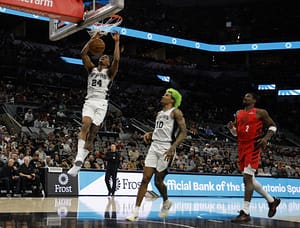
The San Antonio Spurs left the 2026 NBA Summer League with a 4–1 record, but the value of their Las Vegas run was not found in the standings alone. The five games gave the organization a concentrated look at Carter Bryant’s second-year progress, Ja’Kobi Gillespie’s ability to organize an offense, the defensive potential of its rookie class and the depth competing for future opportunities in Austin and San Antonio.
San Antonio opened with a 93–66 loss to Atlanta on July 9 before winning four consecutive games. The Spurs beat the New York Knicks 70–49, the Milwaukee Bucks 90–80, the Utah Jazz 94–82 and the Phoenix Suns 86–81. Different players carried the scoring load in each victory, which made the run more useful than a summer schedule dominated by one high-usage prospect.
The final record showed that San Antonio had enough depth and defensive activity to recover from a poor opener. The underlying numbers revealed an unfinished group that won through rebounding, pressure and lineup versatility despite inconsistent shooting and frequent turnovers. That combination says much more about the Spurs’ development pipeline than a Summer League trophy would have.
The Atlanta Loss Created A Useful Starting Point
San Antonio’s summer began with its least competitive performance. Atlanta led 27–15 after the first quarter and defeated the Spurs by 27 points at the Thomas & Mack Center.
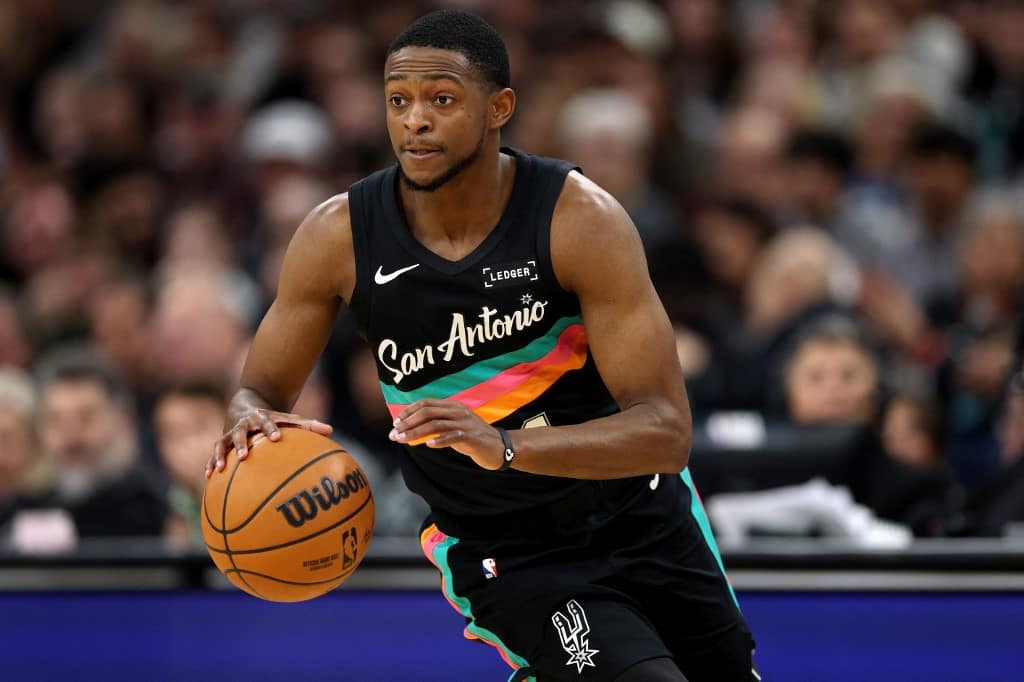
That result exposed problems common to newly assembled Summer League teams. Offensive possessions lacked structure, transition defense broke down and San Antonio struggled to respond once the Hawks established an early advantage. The Spurs did not have the continuity or shot creation needed to reverse the game after Atlanta took control.
Summer League results can be misleading when treated as forecasts, but opening-game disorder still gives coaches useful information. Assistant coach Corliss Williamson and his staff could immediately identify which lineups communicated, which guards organized teammates and which players allowed missed shots or turnovers to affect their defensive effort.
San Antonio’s response became the important part of the story. The Spurs did not need one prospect to take over the remaining schedule. They found different ways to win, beginning with a defensive performance against New York that changed the tone of the week.
The NBA’s official Summer League format guaranteed every team at least five games, with the first four determining the semifinal field. That structure made San Antonio’s recovery meaningful. The Spurs had little time to practice between games, so their improvements had to come through film study, clearer assignments and faster adjustment.
Carter Bryant Showed Why His Second Summer Mattered
Carter Bryant delivered San Antonio’s strongest individual performance in the 70–49 victory over New York on July 11. He scored 19 points on 7-of-10 shooting and made both of his three-point attempts.
Bryant’s efficiency mattered more than the raw total. Summer League often rewards players who dominate the ball, but San Antonio needs Bryant to grow into a two-way wing who can influence games without requiring a high-volume offensive role.
The 20-year-old entered the event after spending his rookie season competing for minutes in a crowded NBA rotation. His developmental priorities were clearer than those of a new draft pick. He needed to make quicker decisions, convert open shots, attack unsettled defenses and use his 6-foot-7 frame across several defensive matchups.
Against New York, he looked comfortable within those requirements. Bryant did not need 20 shots to become the game’s most effective scorer. He selected opportunities, finished efficiently and helped San Antonio hold the Knicks below 50 points.
The Spurs’ win over the Knicks provided a useful picture of how Bryant can earn a larger role. San Antonio’s NBA roster already has major creators in De’Aaron Fox, Stephon Castle, Dylan Harper and Victor Wembanyama. Bryant’s path does not depend on becoming another primary ball handler. It depends on turning the advantages created by those players into efficient possessions.
For readers following Texas basketball development, Bryant’s performance reinforced a broader lesson: a player’s next stage is often defined by role mastery rather than a larger scoring average. San Antonio does not need him to control every possession. It needs him to defend, run the floor and punish defenses that leave him open.
Ja’Kobi Gillespie Provided A Real Point Guard Test
Second-round pick Ja’Kobi Gillespie gave San Antonio one of the clearest developmental stories of the event.
Gillespie recorded 14 points, five rebounds, five assists and two steals against New York while committing only one turnover. He followed that performance with 13 points against Milwaukee before scoring 25 points in the 94–82 win over Utah.
Against the Jazz, Gillespie shot 10-of-21, made three three-pointers, distributed five assists and added two steals. The scoring showed that he could take responsibility when San Antonio needed creation. His overall week showed that his greater value may come from balancing scoring with organization.
That balance is difficult for a young guard in Las Vegas. Summer League rosters contain players competing for contracts, two-way spots and G League roles. Offensive possessions can become rushed when everyone is trying to demonstrate an individual skill. A useful point guard must create order without becoming passive.
Gillespie showed signs of that ability. He could initiate an action, get into the paint and recognize when the possession required his own shot. He also competed defensively despite being listed at 6-foot-1 and 180 pounds.
The official win over Utah was his strongest scoring game, but San Antonio should evaluate more than whether he can produce 25 points in July. The organization must determine whether he can pressure the ball, protect possessions and create enough efficient offense to function beside larger guards.
Castle and Harper give the Spurs unusual size in the backcourt. Gillespie offers a different profile based on speed, lower leverage and traditional point guard responsibilities. That contrast could help him find a developmental role even if immediate NBA minutes are limited.
The Team Identity Was Built On Rebounding And Disruption
San Antonio’s 4–1 record was not supported by elite shooting.
Across five games, the Spurs averaged 81.2 points while shooting 38.7% from the field and 25.3% from three-point range. They committed 20.4 turnovers per game and averaged only 14 assists. Those are not the numbers of a polished half-court offense.
The Spurs won because they created extra possessions and limited what opponents could do with theirs. San Antonio averaged 43.0 rebounds, 14.2 offensive rebounds, 9.6 steals and 6.2 blocks. Its average scoring margin was plus-4.2 despite the 27-point opening loss.
Those numbers fit the type of developmental roster San Antonio assembled. Bryant brought wing size. Tarris Reed Jr. and Maliq Brown added physical and defensive options in the frontcourt. Gillespie pressured guards. Emanuel Miller, Hyunjung Lee and other returning developmental players gave Williamson lineup flexibility.
The official Summer League team statistics placed San Antonio among the event’s strongest rebounding teams. That mattered because poor shooting did not automatically end possessions. Offensive rebounds gave the Spurs additional chances, and defensive activity allowed them to score before opponents organized.
The concern is that the same style will be harder to sustain against NBA rotations. San Antonio cannot expect to overcome inefficient shooting and more than 20 turnovers every night through effort alone. Summer League showed a defensive foundation, but the next developmental step must include cleaner spacing, faster passing decisions and more reliable perimeter shooting.
The Milwaukee Win Showed Competitive Resilience
San Antonio’s 90–80 victory over Milwaukee may have been the clearest example of the team winning without clean offensive execution.
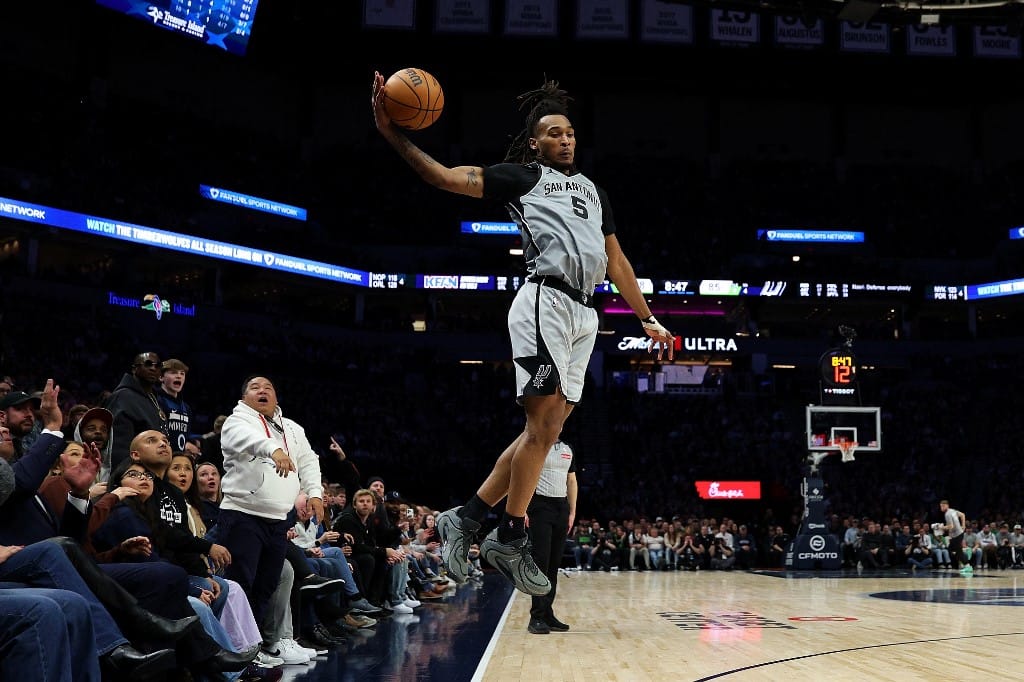
The Spurs shot 36.4% from the field and 21.9% from three. They committed 23 turnovers, while Milwaukee shot 42.6% overall and 44.4% from deep. Yet San Antonio led 25–10 after the first quarter and never allowed the Bucks closer than six points after the opening seven minutes.
R.J. Davis scored 20 points. Emanuel Miller and Gillespie added 13 apiece, and Hyunjung Lee contributed 12 points from the bench. The distribution showed that the Spurs could maintain control without relying on Bryant or one of the first-round rookies to carry the game.
The Spurs’ victory over Milwaukee highlighted a trait organizations look for in developmental players: the ability to remain useful when shots are not falling.
Summer League evaluation often becomes too focused on individual scoring totals. San Antonio’s front office had reason to study which players sprinted back after turnovers, contested without fouling, pursued loose rebounds and maintained spacing when they were not receiving touches.
Those habits determine whether a fringe player can survive limited NBA minutes. A reserve may enter a regular-season game for six minutes and receive only one shot. Coaches need to know whether he can still defend, screen, rebound and execute an assignment.
The Milwaukee game created that type of test. San Antonio’s offense was inefficient, but the group maintained enough physical control to protect its lead.
The Phoenix Finale Demonstrated Organizational Depth
The 86–81 win over Phoenix offered a different type of evidence because several of San Antonio’s most recognizable summer players were no longer carrying the offense.
Miles Kelly led the Spurs with 20 points. R.J. Melendez scored 13, R.J. Davis had 11, and Harry Wessels and Miles Barnstable each added 10. Wessels collected nine rebounds.
Five San Antonio players reached double figures, and the bench scored 40 of the team’s 86 points. The Spurs outscored Phoenix 42–28 in the paint and finished the game on a 12–7 run after the Suns tied it at 74 with 2:42 remaining.
The Summer League finale against Phoenix mattered because development pipelines extend beyond drafted prospects. NBA organizations need a steady supply of players who can fill G League roles, accept training-camp competition and remain available when injuries or transactions create openings.
Kelly, Davis, Wessels and Barnstable may not have the same organizational status as recent draft selections, but their production gave San Antonio more information. The Spurs could evaluate who handled late-game pressure, who understood the defensive coverages and who maintained execution after the better-known prospects received reduced workloads.
That depth is especially relevant to the Austin Spurs. San Antonio’s G League affiliate is not separate from the NBA roster plan. It is where many players learn the terminology, defensive principles and daily expectations that allow them to respond when called up.
A productive final game showed that the program could continue functioning even after the lineup changed. That is a stronger sign of organizational development than one prospect scoring 30 points while every possession runs through him.
The Rookie Frontcourt Requires A Longer Evaluation
San Antonio’s 2026 draft added size through Jayden Quaintance, Tarris Reed Jr. and Maliq Brown.
The Spurs selected Quaintance with the 20th pick and acquired Reed’s rights after he was taken at No. 26. Brown arrived with the 44th selection. The group gave San Antonio several different frontcourt profiles rather than one obvious short-term solution.
Quaintance entered the organization after averaging 8.8 points, 7.5 rebounds and 2.4 blocks across 28 college games at Arizona State and Kentucky. At 6-foot-10 and 255 pounds, he represents a long-term defensive investment whose development cannot be judged by one summer.
Reed brought more immediate size at 6-foot-10 and 270 pounds. Brown arrived with a reputation for defensive awareness and versatility. Their value to San Antonio will depend on whether they can defend NBA actions, rebound outside their area and make quick offensive decisions beside Wembanyama.
The Spurs’ official 2026 draft announcement confirmed a clear emphasis on frontcourt size and defensive potential. Summer League offered the first stage of that process, not a final verdict.
San Antonio does not need one of these players to duplicate Wembanyama. It needs frontcourt options who can complement him or keep the defense functional during his rest periods.
Reed’s physicality, Brown’s defensive instincts and Quaintance’s long-term tools offer different possible answers. The 4–1 record showed that the system could generate defensive production, but training camp and G League assignments will reveal which skills translate against stronger and more organized competition.
The Shooting Numbers Keep The Evaluation Grounded
A successful record should not hide San Antonio’s most obvious limitation.
The Spurs made only 25.3% of their three-point attempts in Las Vegas. They averaged eight made threes on 31.6 attempts per game. That level of inefficiency would compress the floor around every creator and make it difficult for young guards to reach the paint against NBA defenses.
Summer League shooting can fluctuate sharply over five games. Rosters have limited practice time, player combinations change and many attempts come late in disorganized possessions. The percentage should not be treated as a permanent forecast.
It does show where the development pipeline needs more reliable answers. Bryant must prove that efficient games like his performance against New York can become repeatable. Gillespie must develop as a catch-and-shoot option when larger creators control the ball. Frontcourt players must either stretch the floor or create value through screening, passing and offensive rebounding.
San Antonio’s ability to collect offensive rebounds softened the effect of missed shots in Las Vegas. NBA teams will punish poor spacing more severely. The Spurs cannot build every developmental lineup around recovering their own misses.
The same applies to turnovers. A rate above 20 per game suggests that the group’s decision-making did not match its defensive effort. Future training-camp and Austin assignments should focus on making the offense simpler, not merely faster.
Why The 4-1 Record Was Encouraging Without Being Definitive
San Antonio’s Summer League run revealed a pipeline with defensive energy, positional variety and several players capable of taking responsibility on different nights.
Bryant showed a more efficient version of the wing San Antonio hopes he can become. Gillespie demonstrated scoring and playmaking potential. The rookie frontcourt gave the organization multiple developmental profiles. The final game showed that players outside the central prospect group could maintain the team’s competitive structure.
The weaknesses were equally useful. The Spurs did not shoot well, turned the ball over too often and relied heavily on offensive rebounding and defensive disruption. Those issues will become harder to overcome as competition improves.
Summer League cannot determine who will become a dependable NBA rotation player. It can show which players respond to coaching, which skills hold up across changing lineups and whether the developmental group shares an identifiable style.
San Antonio’s 4–1 record provided evidence in each area. The Spurs played with size, pressured the ball, rebounded missed shots and found scoring from different parts of the roster. They also left Las Vegas with clear work ahead in shooting, spacing and possession control.
That is what a productive Summer League should provide. The wins created confidence, but the imperfections created a development plan.