
Imagine a world where you can bet from your couch instantly. It’s a place where odds and algorithms work silently. Now, think of the opposite: the sound of chips, the crowd’s murmur, and the excitement of a casino. It’s not just about where to bet; it’s about which world you choose.
The digital world offers solitude and speed. It’s all about convenience, available 24/7. For beginners, learning the betting basics online is key. It’s betting in its simplest form.
The physical casino is a different story. It’s a sensory experience. You hear the roulette ball, feel the social vibe, and hold a real chip. It’s something a screen can’t match.
In Texas, the choice between online and physical betting isn’t just about preference. It’s about what’s legal and practical. The digital table is always ready, but the physical felt offers a unique ritual. One is for one; the other, for all.
How Texas betting laws affect both options
In sports betting, where you live matters a lot. In Texas, the rules are tricky. You can’t find a sportsbook in Dallas or Houston like in Vegas. But, online betting is different.
This makes choosing where to bet very important. Texas loves competition but doesn’t allow betting on high school football. It’s a big contradiction.

Texas wants competition but says no to betting. Knowing the laws is key to picking where to bet.
The Legal Landscape: A Texan Standoff
If you want to bet in person, Texas is out of luck. A 2023 bill to allow online and retail betting failed. Now, the laws are unclear.
So, what can you do? You can play the lottery or bet on horses. You can also visit the Kickapoo Lucky Eagle Casino. But, no Vegas-style sportsbooks are allowed.
The Current Betting Ban and Its Loopholes
There’s a twist. Texas bans in-person betting but is quiet on online betting. This means you can use online sportsbooks from other countries.
This creates a two-tier system. Local options are limited. But, online betting offers more, even if it’s not officially allowed.
The table below shows where you can and can’t bet in Texas.
| Betting Method | Legal Status in Texas | Key Features & Notes | Best For |
|---|---|---|---|
| Retail Sportsbooks (In-Person) | Illegal | No legal, Vegas-style sportsbooks exist. The 2023 bill to legalize them failed. | Not currently an option. |
| State Lottery & Horse Racing | Legal | Lottery games and pari-mutuel wagering at licensed tracks like Lone Star Park are fully legal and regulated in-state. | Traditionalists, lottery players, horse racing fans. |
| Kickapoo Lucky Eagle Casino | Legal (Tribal Lands) | The only legal casino in Texas, operating under federal tribal law. Offers slots and table games, but not a full sportsbook. | Those near Eagle Pass seeking a casino experience. |
| Offshore, Regulated Sportsbooks | Operates in a Legal Gray Area | Internationally licensed online sportsbooks (e.g., based in Curaçao, Malta). Not licensed by Texas, but not explicitly illegal for users to access. | Most Texans, due to access, odds, and market variety. |
This sportsbook comparison shows the dilemma. Legal options are safe but limited. Online betting offers more but is in a gray area. Your choice depends on how much risk you’re willing to take.
Convenience vs. Experience
In the grand casino of life, where do you place your chips? Do you choose the digital table or the green felt of the physical world? This is the core of the modern gambler’s dilemma. It’s a battle between the algorithm’s efficiency and the crowd’s raw energy.
One offers the perfect logic of a server farm. The other, the chaotic hum of a packed casino floor. Your choice defines your entire experience.
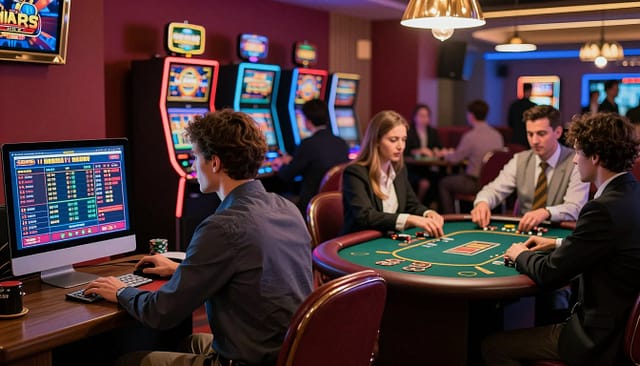
The Algorithm: The Click-and-Bet Life
Welcome to the world of the algorithm. Online betting is the ultimate expression of modern convenience. It’s 2 a.m., and you have a sudden insight. The third-string quarterback for a team 2,000 miles away is going to have the game of his life.
With a few taps on your phone, you’re in. There’s no velvet rope, no dress code, and the bar is always open. This is the domain of the click-and-bet life.
The variety is staggering. Sports from leagues you’ve never heard of, slot games with themes from ancient Egypt to deep space, and poker tables that never close. The bonuses, free spins, and sign-up offers are like a casino host giving you a free drink.
It’s a 24/7, 365-day-a-year operation run by cold, hard code. The only social interaction is with a live dealer on a screen. The only chips are the digital tokens in your account. It’s betting, sterilized and streamlined for maximum efficiency.
The Click-and-Bet Life
This is the domain of the individual. It’s you, your device, and a world of options. The online betting vs casino debate is won here on the grounds of pure, unadulterated convenience.
Need to place a live in-play bet in the 89th minute of a soccer match? Done. Want to switch from blackjack to virtual greyhounds at 4 a.m.? The algorithm doesn’t judge, it just processes. It’s a world of instant gratification, where the “casino floor” is a 6-inch screen and the only dress code is your pajamas.
The Roar of the Crowd (Or the Rustle of Chips)
Now, step through the physical doors. The casino isn’t a service; it’s a sensory bombardment. The clatter of a roulette ball, the shuffle of cards, the collective groan of a blackjack table, the roar of a craps table hitting a hot streak.
This is the atmosphere you can’t download. It’s the weight of a real poker chip, the scent of anticipation (and, let’s be honest, a faint hint of smoke and perfume), and the unspoken social contract of a shared, communal experience.
You’re not just betting against the house; you’re reading the face of the dealer, feeling the collective groan of the roulette table when zero hits, or sharing a laugh with a stranger over a bad beat. The casino is a theater, and the experience is the show. You’re not just a username; you’re a character in the room. This is the fundamental pros and cons of each model in stark relief: the quiet, efficient transaction versus the loud, social spectacle.
The Algorithm vs. The Atmosphere
So, which is superior? The online betting platform offers a sterile, yet boundless, digital playground. It’s the algorithm: logical, vast, and always on. The physical casino offers the atmosphere: the thrill of the tangible.
It’s the difference between listening to a perfect, studio-mastered album and being in the front row of a live concert. One is flawless and convenient; the other is raw, real, and human. The choice isn’t just about where you place a bet; it’s about what you want from the game itself.
Odds, limits, and markets
Forget the neon lights and free drinks for a moment. Strip away the plush seating and complimentary cocktails, and sports betting reveals its true nature. It’s a cold, mathematical game of odds, limits, and market access.
The real battleground between the digital and physical sportsbook comparison isn’t just about convenience. It’s a war of numbers, where the fine print of a betting slip holds more power than any VIP host. Whether you’re tapping a screen or handing cash to a teller, the house always builds its edge into the very structure of the wager.
The Fine Print of the Bet
Let’s talk odds, the lifeblood of any bet. Online sportsbooks, locked in a digital arms race for your action, often wield odds as their primary weapon. To lure you from the competition, they’ll shave a point off the spread or offer a more generous moneyline.
That Bovada welcome bonus or BetOnline’s “odds boost” isn’t just generosity; it’s a calculated loss leader. The house knows that a slightly better price on a Monday Night Football total is more effective marketing than any flashy ad. Brick-and-mortar books, with their higher overhead and captive casino audience, have less competitive pressure on the line.
Then there are the limits. This is where the rubber meets the road for serious players. The high-roller in a Vegas sportsbook might face a betting limit of a few thousand on a marquee NFL game. That same bettor, online, might find a much lower limit on the same game at an offshore book.
Why? Physical books have to manage their risk in real-time with finite capital. An online book, with its global pool of liquidity, can often accommodate larger wagers because it can instantly lay off risk across its entire network. It’s the difference between betting against a single casino’s bankroll and betting against a global marketplace.
How the House Plays Its Hand
This brings us to the “how.” The house edge isn’t a myth; it’s engineered. Online, the “house” plays a longer, more algorithmic game. It uses algorithms to dynamically adjust lines based on a torrent of global betting data, a process that would require a pit boss with a supercomputer in a brick-and-mortar setting.
This allows for the “expansive catalog” of bets—from the coin toss to a quarterback’s total passing yards—that online books can offer. You can bet on the number of three-pointers in an NBA game, the next F1 driver to crash, or a niche e-sports match at 3 AM. Your local sportsbook might not even have a line on that.
The physical sportsbook, by contrast, plays a different hand. Its “market” is the curated, high-volume events. You’ll find every conceivable bet on the Super Bowl, but good luck finding a line on a mid-table Premier League soccer match. Their edge comes from volume and the built-in advantage of the vig.
They don’t need exotic markets when they have a captive audience of tourists and high-rollers who value the experience of betting as much as the bet itself. The online sportsbook comparison becomes stark: one offers a vast, 24/7 global bazaar of odds; the other offers a curated, social, and immediate experience where the bet is just part of the night’s entertainment.
Ultimately, the house always designs the game. The savvy bettor’s job in this sportsbook comparison isn’t to beat the house, but to understand which house is playing which game—and choose the table with the best odds for their play.
Who each option is best for
Choosing between digital betting and a casino floor is more than just odds. It’s about who you are. Do you love data or socializing?
The Lone Wolf Bettor
This bettor is all about data. They see betting as a science, not a social event. They love analyzing stats and making bets alone.
For them, the best sportsbook comparison is all about finding value. They prefer the quiet of online betting over the noise of a casino.
Your Betting Profile: A Quick Diagnostic
Do you spend more time on stats than social media? Does the term “point spread” excite you more than a jackpot? Do you prefer quiet, strategic bets over the casino’s noise?
If yes, you’re likely a data lover. You enjoy the quiet of strategic betting.
The Social Gambler
This player loves the excitement of betting. For them, the sportsbook comparison is less important than the thrill of the moment. They prefer the energy of a sportsbook or casino.
They find joy in sharing wins and losses. A drink in hand makes the experience even better.
In Texas, where laws vary, your choice affects access. Lone Wolves can bet from anywhere. Social Gamblers are limited by location and laws. Knowing your preference is key to making the right choice.