
The San Antonio Spurs did not sign Tobias Harris to replace Victor Wembanyama’s production. No available forward can reproduce the rim protection, shooting range, rebounding reach and offensive attention created by San Antonio’s franchise center. Harris was added to solve a narrower problem that became impossible to ignore during the 2026 postseason: the Spurs need dependable offense and functional frontcourt size during the minutes when Wembanyama is resting.
San Antonio officially signed Harris on July 6, 2026, after agreeing to a reported two-year, $31 million contract. The veteran forward arrived after averaging 13.3 points, 5.1 rebounds and 2.5 assists across 63 games for Detroit during the 2025-26 season. Those numbers do not suggest a new primary scorer. They point to a steady, experienced forward capable of preventing second units from becoming overly dependent on difficult guard creation.
That distinction matters. The Spurs already have high-level initiators in De’Aaron Fox, Stephon Castle and Dylan Harper. Devin Vassell supplies perimeter scoring, and Wembanyama controls entire possessions on both ends. Harris gives coach Mitch Johnson another player who can create a credible shot without requiring the offense to be rebuilt around him.
San Antonio’s Playoff Weakness Was Larger Than One Bad Rotation
The need for a stronger non-Wembanyama structure became clear during San Antonio’s Western Conference Finals series against Oklahoma City. In Game 3, the Spurs were plus-four during Wembanyama’s 39 minutes but lost 123-108. Oklahoma City’s reserves outscored San Antonio’s bench 76-23, setting a conference finals bench-scoring record for the NBA’s modern 16-team playoff format.
The problem was not simply that the Spurs missed Wembanyama’s shot blocking. Their entire possession quality declined when he left the floor. San Antonio had less size around the basket, fewer easy scoring options and less margin for error when guards were forced to attack a loaded defense late in the shot clock.
The NBA’s account of San Antonio’s bench problem showed how quickly Oklahoma City erased early advantages once Wembanyama checked out. In one first-quarter stretch, the Spurs led 19-4 before his substitution. The Thunder cut the lead to 24-19 before he returned.
Harris does not prevent every such run. He does give San Antonio more ways to finish a possession. He can attack a smaller defender from the post, drive against a slow closeout, operate from the elbow or take a catch-and-shoot three when Fox, Castle or Harper draws a second defender.
That may sound modest compared with Wembanyama’s influence, but playoff series often turn on modest advantages. A reserve-heavy unit does not need to dominate. It needs to survive four or five minutes without turning a lead into a deficit.
Harris Adds A Different Form Of Shot Creation
San Antonio’s young guards can generate paint pressure, but relying on them for every non-Wembanyama possession would create predictable lineups. Defenses could crowd their driving lanes, switch smaller players onto limited scorers and force the Spurs into contested perimeter attempts.
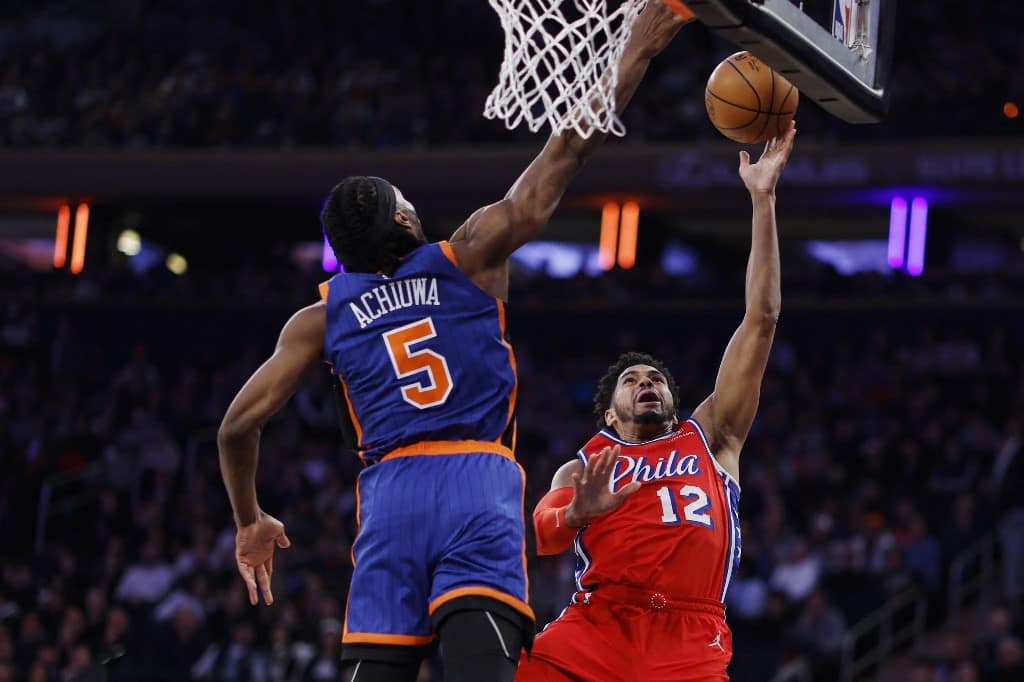
Harris changes that equation through variety. At 6-foot-8 and 226 pounds, he can punish mismatches that would otherwise go unused. A guard who switches onto him must account for his strength. A slower forward must respect his ability to put the ball on the floor. A defense that sends help risks opening a passing lane toward a cutter or perimeter shooter.
His value is less about isolation volume than possession stability. Harris has spent much of his career working beside higher-usage creators. He has played with guards and centers who controlled the offense, which means he does not need constant touches to remain useful. He can begin a possession as a floor spacer, become a screener and finish it by attacking a rotating defender.
The Spurs’ official Tobias Harris signing followed a season in which he helped Detroit secure the Eastern Conference’s top seed. Harris played 15 NBA seasons before arriving in San Antonio, giving Johnson a veteran whose role does not depend on developmental patience.
That experience could prove useful next to Harper and Castle. Young creators frequently improve fastest when the surrounding lineup gives them clear reads. Harris can help create those reads by setting a physical screen, occupying a larger defender and turning a broken possession into a reasonable attempt.
The Best Role May Begin With The Second Unit
Harris could start, but his most valuable minutes may come after Wembanyama takes his first rest. Johnson can stagger Harris with one or two primary guards, keeping a veteran frontcourt scorer on the court without taking the ball away from the team’s younger creators.
A unit featuring Harris with Fox or Harper would retain an inside-outside scoring option. Castle could defend the strongest perimeter assignment, Harris could handle larger forwards, and a mobile center could protect the paint without being asked to generate offense.
That lineup would still need shooting and rebounding. Harris is not an automatic answer to every matchup, and his recent three-point production must remain strong enough to prevent opponents from shrinking the floor. His presence nonetheless gives San Antonio more flexibility than a lineup built entirely around guards, defensive specialists and a low-usage backup center.
The Spurs can use him in several practical roles:
- Secondary scorer when Wembanyama rests
- Post option against switching defenses
- Screener for Fox, Castle or Harper
- Rebounder against smaller reserve lineups
- Late-clock option after the initial action breaks down
That last role may be the most valuable. Championship-level opponents force offenses into second and third actions. Harris has enough strength, balance and shooting touch to rescue possessions that would otherwise finish with an off-balance guard attempt.
San Antonio’s broader frontcourt development remains tied to younger players, but Harris offers a bridge between prospect potential and playoff necessity. That balance fits a franchise trying to compete now without interrupting the growth of its recent draft classes.
Harris Can Reduce The Physical Burden On San Antonio’s Guards
The Spurs’ guard depth creates another strategic question: how can Johnson keep Fox, Castle, Harper and Vassell productive without asking each player to manufacture difficult offense for long stretches?
Harris gives those guards a release valve. Fox can attack early, move the ball and relocate rather than resetting against a packed defense. Harper can use Harris as a screening partner while learning how NBA defenses respond to his size and passing. Castle can cut, post smaller guards and focus more energy on defense instead of carrying every half-court possession.
Harris’s rebounding has value in that structure. He averaged 5.1 rebounds per game for Detroit last season, and his ability to secure defensive possessions can help San Antonio play faster. The Spurs are at their best when stops lead to early offense before opposing defenses organize around Wembanyama or load the lane against Fox.
The NBA player profile for Harris lists 15 years of experience, giving San Antonio a player who has worked through changing roles, different offensive systems and multiple postseason environments. His arrival should reduce the number of possessions in which a young guard feels compelled to force a play simply because no other credible option exists.
The same effect can help Wembanyama. Better bench minutes allow Johnson to protect his workload without treating every rest period as a competitive emergency. San Antonio should not need its 7-foot-4 centerpiece to play unsustainable minutes just to maintain control of a game in January or survive a postseason quarter.
The Defensive Fit Depends On Matchups
Harris is primarily an offensive solution, but San Antonio cannot separate his scoring role from the defensive demands of the Western Conference. Opponents will test him in space, involve him in screening actions and force him to defend quicker players after switches.
His size gives Johnson options against traditional power forwards and physically strong wings. Harris can absorb contact better than a smaller perimeter player and should help the Spurs avoid conceding easy post position when Wembanyama is unavailable.
The harder questions arrive against five-out lineups and fast reserve units. Harris may need to defend at center for short stretches, particularly when San Antonio prioritizes offense and switching over traditional rim protection. Those groups could spread the court and create better driving lanes, but they would require strong communication and committed team rebounding.
Johnson should not expect Harris to become the defensive system. His job is to keep the lineup structurally sound. Harris must hold his position, finish possessions with rebounds and avoid giving opponents repeated transition opportunities. The Spurs’ guards and wings would then need to contain the ball well enough to prevent every possession from reaching the rim.
This is where Wembanyama’s absence changes expectations. With him on the floor, teammates can pressure the perimeter knowing an elite rim protector is behind them. Without him, San Antonio needs disciplined group defense. Harris’s veteran positioning can help, but the entire unit must defend with fewer gambles.
A Veteran Addition Can Support San Antonio’s Development Model
The Harris signing should not be read as a retreat from youth development. It may create better conditions for that development.
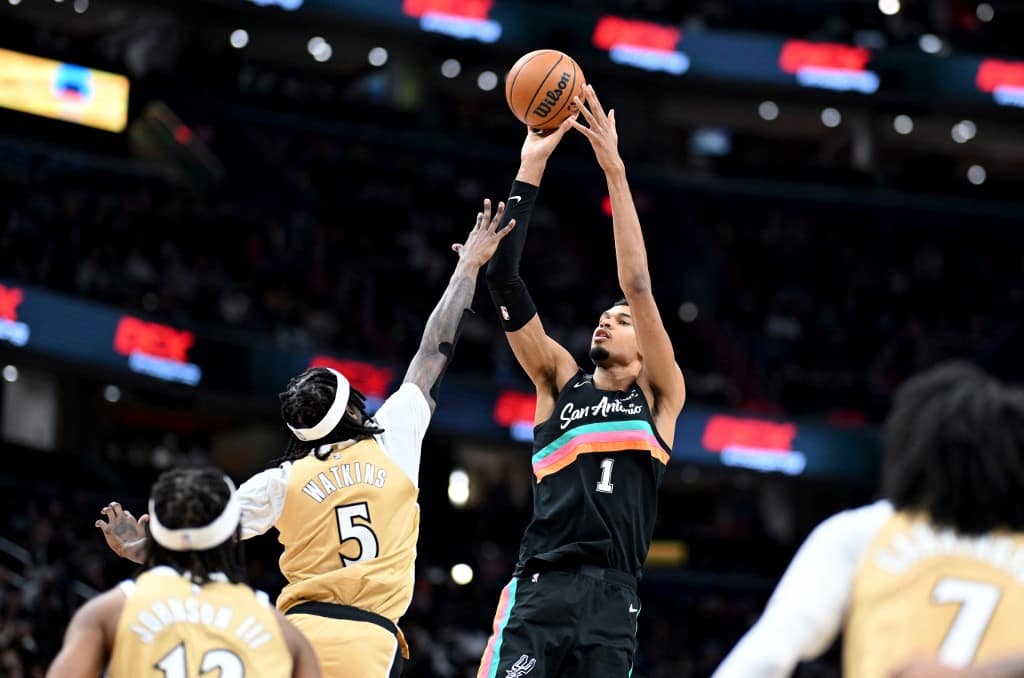
Harper, Castle and San Antonio’s younger wings need meaningful responsibilities, but responsibility is different from overload. Asking young players to solve every difficult possession can produce experience, yet it can reinforce poor habits if the surrounding lineup offers no reliable alternatives.
Harris gives the coaching staff a stabilizing player who can keep the offense organized without taking every important touch. Young guards can run actions with him, read defensive coverages and learn how to attack advantages instead of creating them from nothing.
That developmental structure matters for Texas basketball audiences beyond the NBA level. Good player development does not mean removing all veteran competition. It means creating lineups where younger players receive real decision-making opportunities inside a system that still rewards efficient basketball.
For readers following the wider state basketball pipeline, the site’s Texas basketball championship coverage connects professional lessons with the habits that matter at tournament and developmental levels: role clarity, lineup balance, defensive communication and shot selection under pressure.
Harris may take some shots from younger teammates, but he could improve the quality of the possessions they control. That is a productive trade for a Spurs team whose expectations changed after reaching the 2026 Western Conference Finals.
Why The Non-Wembanyama Minutes Could Decide San Antonio’s Ceiling
The Spurs’ best lineups will continue to revolve around Wembanyama. Harris was not signed to alter that identity. He was signed to make the remaining minutes less fragile.
San Antonio needs a second unit that can score without abandoning defensive balance, survive switches without becoming undersized and protect leads without rushing Wembanyama back into the game. Harris addresses each of those needs in a practical way.
His production may not dominate nightly headlines. A successful season could consist of steady 12-to-15-point performances, timely rebounds, productive screening and four-minute stretches in which San Antonio simply avoids losing control. Those contributions become more valuable in April and May, when opponents identify weak lineup combinations and attack them repeatedly.
The Spurs learned against Oklahoma City that Wembanyama’s excellence cannot cover every rotation gap. Harris gives Johnson a veteran scorer who can hold a lineup together, support young creators and make the offense less predictable when its centerpiece rests.
That is why his most important work may happen away from the starting introductions. San Antonio’s season ceiling will depend on how well the team plays during the minutes that once exposed its biggest weakness.