
Welcome to Texas, where the rules of gambling are as clear as a dusty West Texas sandstorm. If you’re wondering if you can bet on the Cowboys this Sunday, you’re in for a challenge. While 38 states have legalized sports betting, Texas sticks to its 19th-century laws.
The current legal landscape in Texas is complex and full of contradictions. The Texas Penal Code bans most gambling, except for the lottery, horse and greyhound racing, and tribal gaming. This leaves most Texans with few legal betting options.
The Texas sports betting laws are very strict. You won’t find any legal sportsbooks or online betting apps here. Bills like HJR 102 have failed, leaving the market in limbo. This creates uncertainty for activities like daily fantasy sports.
Texas stands out as a place where betting is banned, unlike most of the country. The laws are old and confusing, making it hard for people to know what’s legal. The debate at the Capitol continues, but for now, betting on sports in Texas is not an option.
What is allowed and what is not
Want to bet in Texas? You’ll need a map and a strong understanding of the laws. We’ll guide you through what’s legal and what’s not in the Lone Star State.
First, let’s look at what’s explicitly on the table. You can play the Texas Lottery for big jackpots. Or bet on horses or greyhounds at licensed tracks. Bingo at local halls or churches is also allowed. And, you can visit one of the state’s three tribal casinos, like Kickapoo Lucky Eagle Casino. These are the only games the state officially approves.
Now, let’s talk about sports betting and online casinos. Betting on sports or playing at online casinos from home is illegal. The Texas Constitution bans casino gambling, except for tribal gaming. So, a Vegas-style casino in Texas is just a dream for now.
Daily fantasy sports (DFS) sites like DraftKings and FanDuel operate in Texas. But, they exist in a legal gray area. The state hasn’t made them legal, but hasn’t banned them either. It’s a bit like the wild west, where you can play but the rules are shaky.
In short, Texas has a few legal gambling options but draws a hard line elsewhere. The state’s laws on gambling are strict, shaped by history, culture, and failed attempts to change them. For more on this, check out gambling in Texas laws.
So, what can you do? You can play the lottery, bet on horses, or visit a tribal casino. But, sportsbooks and local casinos are off-limits for now. The rules are strict, and the stakes are high, thanks to decades-old laws.
Offshore vs domestic platforms explained
Choosing between offshore and domestic betting platforms in Texas is like picking between a rattlesnake and a scorpion—both have their own particular venom. For Texans trying to navigate the murky waters of online wagering, understanding this digital divide is key. One path leads to the unregulated, international waters of offshore books, while the other leads to the mirage of domestic, regulated sportsbooks that shimmer on the horizon but remain frustratingly out of reach.
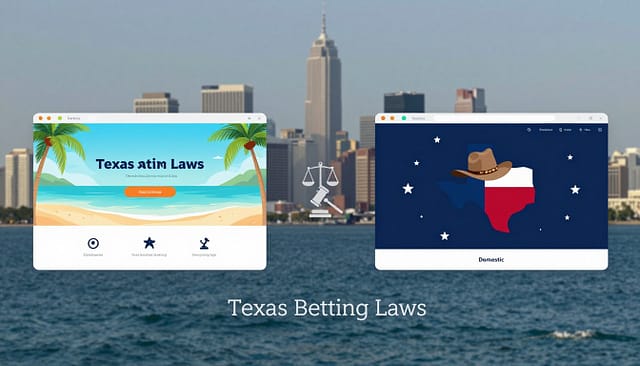
Offshore betting sites operate like digital ghost ships, registered in places like Panama, Costa Rica, or Curaçao. They fly no flag that offers you, the bettor, any legal protection. They’ll gladly take your action on the Longhorns or the Cowboys, but if the site disappears with your deposit, you have about as much chance of getting it back as finding a snowball in a Laredo July. These platforms exist in a legal gray zone—operating in a space where Texas betting laws have no jurisdiction, and you have no recourse.
Domestic, regulated platforms represent the other side of the coin—or at least, the promise of it. In 38 states, these regulated sportsbooks offer consumer protections, responsible gaming tools, and legal oversight. But in Texas, they remain the white buffalo of the betting world: often talked about, but rarely seen. While you can read about other legal betting forms, the reality is that using a VPN to access a legal sportsbook from a legal state while sitting in Dallas is a common, though legally murky, workaround. It’s a digital shell game, and the house—or in this case, the state attorney general—holds all the aces.
The table below breaks down the stark reality of your two “choices”:
| Feature | Offshore/Unregulated Books | Domestic/Regulated Books |
|---|---|---|
| Legal Status in Texas | Operate in legal gray area; not licensed by TX | Not available; using them via VPN violates terms & state law |
| Consumer Protections | None. You are not a customer; you are a liability. | Strong (in states where legal): Dispute resolution, deposit insurance. |
| Payment & Withdrawals | Slow, high-fee crypto or wire transfers; high risk of non-payment. | Fast, insured bank transfers or ACH in regulated states. |
| Biggest Risk | Losing your entire balance with zero recourse. | Account closure, funds seizure if using VPN from Texas. |
So, what’s a Texan to do? The offshore route is the Wild West—high risk, high reward, and absolutely no sheriff in town to hear your grievance. The domestic, regulated path is a mirage for Texans, a promised land visible from the desert but with no map to get there. The real gamble isn’t on the game; it’s on which platform won’t disappear with your money. Staying informed on Texas betting laws is your only defense. As the landscape shifts, as detailed in recent coverage of legislative efforts, the only safe bet is knowledge.
Risks and responsibilities
Placing a bet online seems easy, but Texas betting laws make it complex. It’s a game where the legal system is the real opponent. Knowing the risks and your duties is essential to avoid trouble.
Going to offshore betting sites is risky. These sites are not covered by Texas betting laws or U.S. consumer protection. If your winnings go missing or the site closes, you have no way to get help. You’re betting on a game and trusting a faceless entity to pay you.

Not knowing the law is not a good excuse, as Texas Penal Code 47.02 makes illegal gambling a Class C misdemeanor. While the law might not often target individual bettors, it’s there. Using offshore sites can also lead to federal issues. The Federal Wire Act and the Unlawful Internet Gambling Enforcement Act (UIGEA) create a legal minefield. You might be betting from your home in Houston, but the transaction could violate federal laws.
Your Data, Their Treasure
When you give your personal and financial info to an offshore site, you’re not just sharing your name and email. You’re giving them your Social Security number, bank details, and betting history. Data security is often ignored by these sites, making you a target for identity theft and fraud. The Texas betting laws that protect consumers in regulated markets are missing here.
Know Your Protections (Or Lack Thereof)
Legal, regulated sportsbooks in states like New Jersey or Nevada offer different protection. They:
- Ensure the fairness of games and odds.
- Keep your funds safe in separate accounts.
- Offer a formal, state-monitored dispute resolution process.
- Provide resources for responsible gambling.
Offshore, you get none of these. Your only guarantee is the site’s reputation, which can change quickly.
Your Responsibilities as a Bettor
Operating in this gray area means more than just finding a bet. It’s about managing your own risk. As a bettor, you have the main responsibility. This includes:
- Know the source: Is the operator licensed anywhere with a reputable gaming commission, or is it a fly-by-night operation?
- Read the fine print: Withdrawal limits, rollover requirements, and bonus terms are often designed to make it difficult to cash out your winnings.
- Secure your end: Use strong, unique passwords and two-factor authentication where possible, as your data is a prime target.
| Aspect | Offshore/Unregulated Site | Regulated, Legal Market |
|---|---|---|
| Consumer Protection | Virtually none. You are not a customer; you are a data point. | Strong. Governed by state law, with funds and fairness guaranteed. |
| Legal Recourse | Little to none. Disputes are at the site’s discretion. | Formal, state-backed dispute and appeal processes. |
| Data & Financial Security | High risk. Data security standards are unknown and unverified. | High. Strict regulations on data handling and financial security. |
In the end, dealing with Texas betting laws and offshore sites is risky. You must understand the legal risks, protect your data, and accept the lack of consumer safeguards. In today’s world, the house always wins. But in this game, the “house” might be a server in a country you’ve never heard of, playing by its own rules.
Staying informed as laws evolve
Understanding Texas betting laws is like predicting politics. The 88th Legislative Session brought big changes, like proposals for casinos and sportsbooks. But, these ideas didn’t pass yet. The political scene is always changing.
Governor Abbott might support it, Speaker Phelan could help, but Lieutenant Governor Patrick is against it. This makes for a high-stakes game. Big money is involved, with groups like the Texas Sands PAC playing a big role.
For those who follow politics closely, keeping up with Texas betting laws is key. Watch who’s funding the efforts and who’s against them. The 89th Legislative Session will be critical, with arguments for tourism and tax relief against the state GOP’s stance.
Your best move is to follow the committees and money in politics. Bills can pass or fail based on committee votes and when they’re scheduled. Keep an eye on the legislature’s site and campaign finance reports. In Texas, the game is always changing, and the rules are being written as we go.