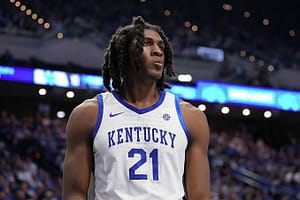
Texas Recruiting took a public miss when Sammy Jackson committed to VCU, but the larger read for Longhorns fans is not limited to one decision. Jackson, a 6-foot-7, 185-pound forward from Roman Catholic High School in Philadelphia, chose VCU over Indiana, Texas and St. Joseph’s on June 25, 2025, according to SI’s commitment report. That result matters because Texas was involved with a versatile wing-forward profile, yet the program has continued to add size, guards and local talent across its roster plan.
For fans in Austin and across the state, the Jackson recruitment is best viewed as a checkpoint. Texas did not win that specific race, but the Longhorns remained active with players who fit different roster needs. The program’s reported 2026 additions include Austin Goosby, Bo Ogden, Joe Sterling and Coleman Elkins, while transfer pieces David Punch, Isaiah Johnson and Amari Evans give the staff more immediate options. The later reclassification of Marcus Spears Jr. adds another major layer to that plan.
What Jackson’s VCU Choice Means For Texas Recruiting
Texas Recruiting Missed A Modern Forward Profile
Jackson’s frame and production made him an appealing target. The research for this story lists him at 6-foot-7 and 185 pounds, with junior-year averages of 13.4 points, 4.9 rebounds, 3.2 assists and 1.2 steals per game. It also notes that he made 51 three-pointers and helped Roman Catholic reach the PIAA 6A championship game.
That type of line speaks to a player who was not limited to one narrow job. A forward who can score, pass, rebound, defend passing lanes and stretch the floor gives a coaching staff more lineup flexibility. For Texas Recruiting, the lesson is clear: the staff was involved with a player whose skill set fits the current college game, especially for teams that want bigger wings who can keep the ball moving.
Missing on Jackson does not create a complete roster gap by itself. Recruiting boards overlap by design. A program can value a player and still have other paths to reach similar lineup balance. Texas appears to have pursued that balance through a mix of high school signees, transfers and one major reclassification.
Why VCU Was A Real Basketball Fit
Jackson’s decision also deserves respect on its own terms. VCU has long been a serious basketball program with a clear identity, and a player choosing that route is not simply rejecting larger-name options. For a forward trying to develop, role clarity, coaching comfort and playing opportunity can carry as much weight as conference branding or regional pull.
That is useful perspective for local fans. A finalist list is not a trophy case. It shows that a staff earned a place in the conversation, not that the outcome was close or guaranteed. Texas being in Jackson’s final group says the Longhorns had appeal. His VCU choice says another program closed better for his priorities.
How The Frontcourt Board Changed
Marcus Spears Jr. Reshapes The Ceiling
The largest development after Jackson’s decision is Marcus Spears Jr. reclassifying to join Texas for the 2026-27 season. CBS Sports reported in July 2026 that Spears, originally the No. 1 recruit in the 2027 class, reclassified to play for the Longhorns this season in its Texas report. That type of addition changes how fans should read the roster picture.
Spears does not erase the Jackson result, because they are separate recruitments with separate development paths. He does, though, give Texas a higher-end forward piece for the near term. A reclassified player often brings a different planning challenge for coaches: the staff must balance long-term growth with the faster timetable that comes from joining college basketball earlier than originally expected.
For Texas, that means patience and structure matter. A talented young forward needs defined minutes, defensive standards and offensive touches that do not force him to carry too much too soon. If the staff manages that correctly, Spears can raise the top of the rotation while other players handle more specialized roles.
Local Size Still Matters
The reported 2026 group also includes Coleman Elkins, a 6-foot-10 center from Austin, and Bo Ogden, a 6-foot-6 forward from Austin. Those local ties are valuable beyond public relations. Keeping Austin-area frontcourt talent connected to the program helps younger players across Central Texas see a realistic path from local gyms to the Longhorns’ practice floor.
Elkins is described in the research as a developmental prospect. That label can be positive if the staff has a clear plan. Developmental bigs often need strength work, timing, screening discipline and defensive positioning before they can become regular college contributors. In a roster with transfers and higher-ranked players, a longer runway can be useful rather than limiting.
Why Texas Recruiting Still Has Local Pull
Goosby And Ogden Keep The State Connection Strong
Texas Recruiting still has a clear in-state story. Austin Goosby, a 6-foot-5 guard from Melissa, is listed in the research as the No. 18 national player by 247Sports. Ogden brings another Texas connection from Austin. Those pieces matter to local fans because the Longhorns are not building only through national name recognition; they are still drawing from the state’s own player base.
That is especially relevant for high school coaches and families around Texas. When a program signs or lands commitments from players in Melissa, Austin and Harker Heights, it keeps the recruiting conversation close to home. The state has enough basketball depth that Texas can chase national prospects while still making local players feel like priorities.
That balance is not automatic. Texas has to compete with national programs, regional rivals and professional development paths for top prospects. Still, the presence of in-state names across the roster plan gives the staff a better connection point with fans who follow UIL games, summer circuits and local training scenes.
Shooting And Guard Depth Support The Wings
Joe Sterling, a 6-foot-4 shooting guard from Encino, California, is described in the research as an elite shooter. Isaiah Johnson, a 6-foot-1 guard from Los Angeles, and Amari Evans, a 6-foot-5 guard from Pittsburgh, joined through the transfer route with three years of eligibility remaining, according to the research notes. Those additions help explain why missing on one forward does not define the class.
Wings and forwards need spacing to be effective. If Texas can surround its frontcourt pieces with guards who can shoot, attack closeouts and defend at the point of attack, the roster becomes easier to coach. A forward like Spears, a developing big like Elkins or a versatile player like Ogden benefits when the guard group can organize possessions and punish defensive help.
How Transfers Change The Coaching Plan
David Punch Adds A Texas Frontcourt Link
David Punch, a 6-foot-7 forward from Harker Heights, transferred from TCU with two years of eligibility remaining, according to the research. His profile gives Texas another in-state frontcourt option and a player with prior college experience. That matters because high school recruits and reclassified players often face a learning curve that transfers can help soften.
Punch’s value should not be judged only by scoring. A college forward can help through rebounding, defensive switches, physical screening, transition running and practice competition. For a coaching staff, having an older forward in the room can support younger players who are still learning daily habits.
Roster Depth Gives Sean Miller More Lineup Choices
Under Sean Miller, Texas finished the 2025-26 season at 21-15 and reached the NCAA Tournament’s West Regional Semifinal, according to the research. The follow-up roster work suggests a staff trying to widen its options rather than depend on one recruiting win.
The mix is notable: a high-ceiling reclassified forward, in-state high school talent, shooting help, transfer guards and a transfer forward. That does not guarantee a clean rotation. It does give the coaching staff several ways to build one. Texas can play bigger, use multiple guards, develop younger frontcourt pieces or lean on transfers while freshmen adjust.
- For fans: watch how quickly Spears is given responsibility and how Texas spaces the floor around him.
- For local coaches: the in-state names reinforce that Texas high school basketball remains part of the Longhorns’ roster plan.
- For player development: Elkins, Ogden and Punch show how different timelines can exist within the same frontcourt group.
What Texas Fans Should Track After Jackson
Texas did not get Sammy Jackson, and that part of the story should not be softened. He was a finalist-level target who chose VCU. The better question is whether the Longhorns responded with enough roster variety to protect themselves from that miss.
Based on the research available as of Aug. 15, 2026, the answer leans positive. Spears gives Texas a major talent boost. Goosby and Ogden keep state ties visible. Sterling brings shooting. Elkins offers long-term size. Punch, Johnson and Evans add transfer depth with eligibility remaining.
The key for Texas Recruiting now is not just collecting names. It is turning those pieces into roles that fit. Jackson would have offered a versatile forward option, but Texas has built enough alternate paths that his VCU commitment reads more like a missed opportunity than a roster setback. For Longhorns fans, the next measure is how Sean Miller turns that depth into dependable combinations once practices, rotations and real game pressure arrive.