
The San Antonio Spurs have spent several seasons extending their reach beyond Frost Bank Center, but their latest agreement with Bexar County turns that effort into a more significant test of the franchise’s Texas identity.
On July 7, 2026, Bexar County commissioners approved an amendment allowing the Spurs to play as many as four regular-season home games away from Frost Bank Center during each of the 2026–27 and 2027–28 seasons. The previous arrangement permitted three relocated home games. The new agreement creates room for international appearances and continued games in Austin, where the Spurs have played annually since 2023.
Four games represent less than 10 percent of a standard 41-game home schedule. The number is still large enough to affect San Antonio ticket holders, East Side businesses, arena workers and the relationship between the franchise and its home market.
The Spurs now have to prove that regional expansion can bring new fans into their basketball network without making San Antonio supporters feel that premium dates are being taken away from them. That balance will become harder as Victor Wembanyama raises national and international demand for the team.
The County Agreement Gives The Spurs More Scheduling Freedom
The Bexar County Commissioners Court approved the revised arrangement after the Spurs requested permission to move one more regular-season home game away from Frost Bank Center.
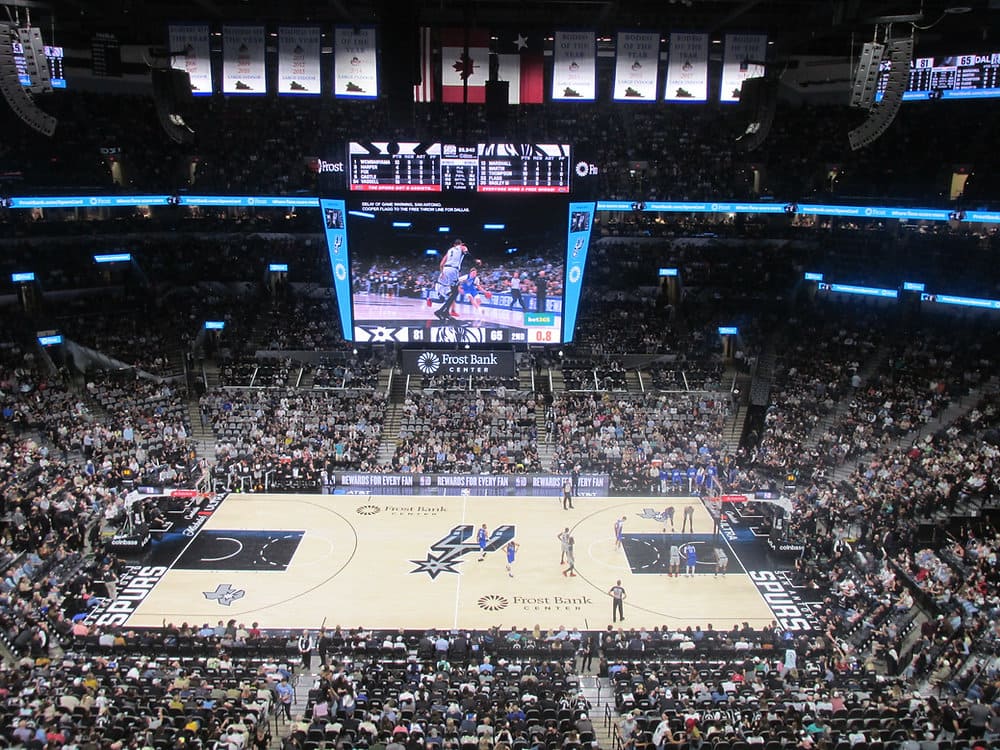
Under the previous agreement, the franchise could relocate three home games: two within 100 miles of the arena and one internationally. The new structure permits four relocated home dates in each of the next two seasons and gives the organization broader flexibility in deciding where those games are played.
The Bexar County agreement details matter partly because Frost Bank Center is unavailable during portions of the San Antonio Stock Show & Rodeo. The Spurs have traditionally managed that conflict through an extended road trip. Games in Austin or another market can now turn part of that scheduling disruption into a regional growth opportunity.
County commissioners approved the change by a 4–0 vote, with Precinct 4 Commissioner Tommy Calvert abstaining. His concerns reflected the central issue surrounding the strategy: a Spurs home game staged elsewhere does not generate the same activity around Frost Bank Center.
A relocated date may reach a new audience, but it can remove spending from parking operations, concessions, nearby restaurants, arena staffing and other local services. The franchise must show that the wider regional benefit is strong enough to offset those immediate losses.
The agreement gives the Spurs freedom. It does not settle whether every use of that freedom will strengthen the organization’s relationship with San Antonio.
Austin Remains The Clearest Texas Growth Market
Austin is the most logical destination for the Spurs’ relocated Texas games.
The two cities are separated by roughly 80 miles along Interstate 35, placing the Moody Center within the geographic area the organization has treated as an extended home market. The Spurs began staging regular-season games in Austin in 2023 and have used those dates to reach fans who may follow the team but rarely travel to Frost Bank Center.
Austin offers several advantages. It has a large and growing population, strong corporate activity, the University of Texas and an arena capable of presenting an NBA game at a high level. It lacks its own NBA franchise, leaving the Spurs with an opportunity to establish deeper loyalty before another team or league initiative competes for that attention.
The strategy is not simply about selling out the Moody Center for one night. San Antonio must determine whether Austin games create lasting engagement. Useful measures would include ticket buyers who later attend games at Frost Bank Center, growth in youth basketball programs, regional sponsorship activity, merchandise demand and television or streaming audiences across Central Texas.
For followers of Texas basketball competition, the Austin series connects professional basketball with a broader regional system. Central Texas families already travel between San Antonio, Austin and surrounding communities for school games, club tournaments and development events. A stronger Spurs presence can place the franchise closer to that existing movement.
The risk is treating Austin as a separate audience instead of a route back toward San Antonio. The most successful model would make Central Texas fans feel closer to the Spurs’ home base rather than encouraging them to view Moody Center appearances as a substitute for visiting Frost Bank Center.
Victor Wembanyama Changes The Scale Of The Opportunity
The Spurs’ regional expansion began before Victor Wembanyama developed into an All-NBA centerpiece, but his presence changes its potential.
Wembanyama gives San Antonio a player with unusual reach across Texas, the United States and Europe. His ties to France make the Spurs a natural participant in the NBA’s international schedule, while his performance gives fans in Austin a stronger reason to attend when the team brings a regular-season game north on Interstate 35.
The franchise announced in May that it will play the New Orleans Pelicans at Accor Arena in Paris on January 14, 2027, followed by another game at Co-op Live in Manchester on January 17. The Manchester date will be the first NBA regular-season game played in that city.
The Spurs’ 2027 European schedule reflects the organization’s international history. More than 50 international players have appeared for San Antonio since the franchise entered the NBA, including seven from France.
Those games serve a different purpose from Austin dates. Europe helps the Spurs build global recognition, commercial relationships and connections around Wembanyama. Austin gives them a chance to deepen their hold on a nearby Texas market.
Both strategies depend on the same central asset, but the franchise should judge them by different standards. International games can create global visibility and league-level exposure. Austin games should produce repeatable regional behavior, including travel to San Antonio, participation in team events and long-term identification with the Spurs.
Wembanyama can attract attention in any location. The harder task is converting that attention into a durable fan relationship that remains connected to San Antonio.
Relocated Games Carry A Cost For Home-Market Fans
A home game is more than a designation on an NBA schedule. It is one of only 41 regular-season dates promised to a team’s local market.
Moving four of those games means San Antonio fans could have access to only 37 regular-season dates at Frost Bank Center before any other league scheduling adjustments. Season-ticket packages, opponent quality and the distribution of weekend games will shape how strongly supporters react.
The impact will depend on which games are moved. Fans may be more accepting when relocated dates replace part of the traditional rodeo road trip or feature opponents that historically attract lower demand. Frustration could rise if high-profile games involving Western Conference contenders are assigned to Austin or overseas.
The Spurs should communicate those choices early. Season-ticket holders need to know how relocated games affect package pricing, account credits, playoff priority and access to tickets in other markets. Families need enough notice to decide whether an Austin game is a realistic road trip.
The San Antonio Report’s coverage of the revised agreement noted that county officials viewed the flexibility as a way to support international opportunities and Austin appearances during the rodeo period. That explanation is stronger when the relocated schedule solves an existing arena conflict rather than creating a new reduction in local access.
San Antonio supporters have remained the foundation of the franchise through rebuilding seasons and its return to championship contention. Regional growth cannot be presented as a replacement for that relationship.
Frost Bank Center’s East Side Economy Remains Part Of The Debate
The economic effect of moving games away from Frost Bank Center reaches beyond ticket holders.
Arena employees lose potential work hours when a home date is played elsewhere. Parking operators, concession staff, transportation providers and nearby businesses lose one evening of concentrated activity. Bexar County can lose arena-related revenue tied to the event.
The effect of one game may appear limited, but four dates across two consecutive seasons create a larger pattern. A successful team led by Wembanyama could generate strong demand at Frost Bank Center, making each transferred game more valuable than it would have been during an earlier rebuilding period.
The Spurs can argue that Central Texas growth creates longer-term benefits. An Austin fan introduced to the team at Moody Center may later buy tickets in San Antonio, visit The Rock at La Cantera or support regional sponsors. European appearances can increase the franchise’s profile and commercial value.
Those benefits are harder to measure than lost local game-night activity. The organization should be prepared to provide evidence showing whether relocated games produce additional regional attendance rather than moving existing customers from one venue to another.
This issue carries extra weight as San Antonio continues discussing a possible downtown arena. Frost Bank Center has been the Spurs’ home since 2002, and the current lease runs through 2032. Decisions about games outside the building will be interpreted within the wider public debate over the franchise’s future venue.
The expansion strategy will earn more local trust when the Spurs make a clear distinction between broadening their audience and weakening their commitment to San Antonio.
Moody Center Games Create A Fan-Planning Test
An Austin home game may be geographically close, but it creates a different planning experience for supporters.
Travel from San Antonio to Austin can become difficult during weekday traffic. Parking, hotel decisions, ticket prices and late-night return travel may turn an 80-mile trip into a much larger commitment. Families attending with younger fans must account for school schedules and game-ending times.
The Moody Center offers modern amenities and a strong event setting, yet its downtown Austin location creates different transportation patterns from Frost Bank Center. Fans accustomed to driving directly to the East Side arena may need to use remote parking, rideshare services or a longer walk.
The Spurs can reduce those barriers by treating the games as regional events rather than standard home dates placed in another building. Transportation partnerships, ticket packages, fan events and clear travel information would help connect San Antonio supporters with the Austin experience.
The organization can create a two-city basketball weekend around selected dates. Youth tournaments, coaching clinics, community events or development programs could give families another reason to participate. Those additions would fit the website’s focus on Texas basketball development rather than presenting the event as an isolated NBA attraction.
The NBA’s official Spurs schedule page will become the key planning resource once the 2026–27 regular-season dates and venues are finalized. Fans will need to distinguish Frost Bank Center games from Austin dates and international matchups before purchasing tickets or arranging travel.
A successful regional game should feel connected to the broader Spurs season. Poor communication could make it feel like a home date removed from San Antonio without a clear benefit for local supporters.
Austin Games Can Strengthen The Texas Basketball Pipeline
The regional strategy has value beyond ticket sales when it creates stronger connections with players, coaches and families.
Central Texas has a dense network of school programs, club teams, college basketball and tournament facilities. A regular Spurs presence in Austin gives the franchise more opportunities to connect with that audience through clinics, coaching education, youth events and community programming.
Professional franchises cannot claim direct credit for the development of every young player in their region. They can still influence participation and create clearer points of contact between local basketball communities and the highest level of the sport.
A Spurs game at Moody Center can become a focal point for those efforts. The team could build programming around local coaches, girls’ basketball, adaptive sports, officiating development or access for communities that may not regularly attend NBA games.
The strongest programs would continue after the team leaves Austin. One-night appearances create attention, but repeated clinics, school partnerships and coaching resources create a regional footprint.
San Antonio must avoid making the expansion feel purely commercial. Central Texas fans are more likely to develop durable loyalty when the franchise contributes to basketball activity around them rather than arriving only to sell tickets.
The same principle applies internationally, though the audience and scale differ. Community events in Paris and Manchester can reinforce the Spurs’ global identity. Austin should receive a deeper and more continuous approach because it sits inside the team’s Texas home region.
The Spurs Must Protect San Antonio While Growing Beyond It
The franchise’s expansion strategy contains a real opportunity. San Antonio can claim a larger Central Texas audience, use Wembanyama’s international profile and turn scheduling conflicts into events that grow the organization.
The strategy carries an equally real test. Every home game moved away from Frost Bank Center asks local fans and businesses to give up a date that would normally belong to San Antonio.
The next two seasons will show whether the Spurs can create growth that returns value to their home market. Austin games should lead more Central Texas fans toward San Antonio. European dates should raise the franchise’s international profile without reducing its local identity. Community initiatives should extend beyond arena attendance.
Four relocated games per season are not enough to redefine the franchise on their own. They are enough to reveal its priorities.
San Antonio supporters will judge the plan through the opponents selected, the quality of communication, season-ticket treatment and the visible benefits created across the region. County officials will watch local economic effects. Austin fans will decide whether the annual series creates genuine attachment or remains a temporary event.
The Spurs have an opportunity to present themselves as Texas’ team without becoming less rooted in San Antonio. Achieving both goals will determine whether the expanded schedule becomes a model for regional growth or a recurring source of tension around the franchise’s home identity.